Skip to content
Haematologist discussing a transplant plan with a patient and family member

Bone marrow transplant

Bone marrow transplantcare in India

Send your diagnosis, pathology and treatment history for specialist review, understand transplant options and donor matching, and get a written estimate before you decide whether to travel.

Begin here

Request a care plan

First name
Last name
Email
WhatsApp / phone
How soon are you looking to travel?

We never share reports with a hospital until you say so. No obligation to travel.

  • Varies by transplant type; usually includes a hospital stay and an extended period near the transplant centre, confirmed by your team

    Typical stay

  • JCI / NABH

    Partners

  • 48h

    Case review

Overview

Bone marrow transplant, explained

A bone marrow or stem cell transplant replaces diseased or damaged blood-forming cells with healthy ones, either from the patient (autologous) or from a donor (allogeneic). It is used for selected blood cancers and other serious blood and immune conditions. A transplant is a complex, high-risk treatment that needs careful assessment of the disease, donor options and overall health. MedMax helps you organise your records for specialist review. It does not recommend a treatment.

Haematology consultation reviewing blood test and transplant planning reports

Pathways

Types of bone marrow transplant

The right option depends on your diagnosis, disease status, age, overall health and whether a suitable donor is available.

  • 01

    Autologous transplant

    Uses your own stem cells, collected and stored before high-dose treatment, commonly considered for some lymphomas and myeloma.

  • 02

    Allogeneic transplant (matched sibling donor)

    Uses stem cells from a brother or sister whose tissue type (HLA) closely matches yours.

  • 03

    Matched unrelated donor transplant

    Uses stem cells from an unrelated donor identified through a donor registry. [confirm registry access and process by hospital]

  • 04

    Haploidentical (half-matched) transplant

    Uses stem cells from a partly matched family member, such as a parent, child or sibling, which widens donor options for many patients. [confirm availability by hospital]

  • 05

    Cord blood transplant

    Uses stem cells from donated umbilical cord blood, used in selected cases. [confirm availability by hospital]

  • 06

    Reduced-intensity (non-myeloablative) conditioning

    A gentler preparation regimen used in selected patients who may not tolerate high-dose treatment.

Treatments

What the transplant process may involve

A transplant team should explain the purpose, risks, side effects and alternatives at each step.

  1. 01

    Case review

    Your diagnosis, pathology, genetic tests, treatment history and current disease status are reviewed to assess whether transplant is appropriate.

  2. 02

    Fitness assessment

    Tests of the heart, lungs, liver, kidneys and infection status to confirm you are fit for transplant.

  3. 03

    Fitness-to-travel review

    Your treating team confirms whether it is safe for you to travel for planned transplant care.

  4. 04

    Donor search and HLA matching

    Tissue-typing of you and potential donors, and a registry search if no family donor is suitable.

  5. 05

    Stem cell collection

    Stem cells are collected from you or your donor, from the blood or bone marrow.

  6. 06

    Conditioning

    Chemotherapy, with or without radiation, to prepare your body for the transplant.

  7. 07

    Stem cell infusion

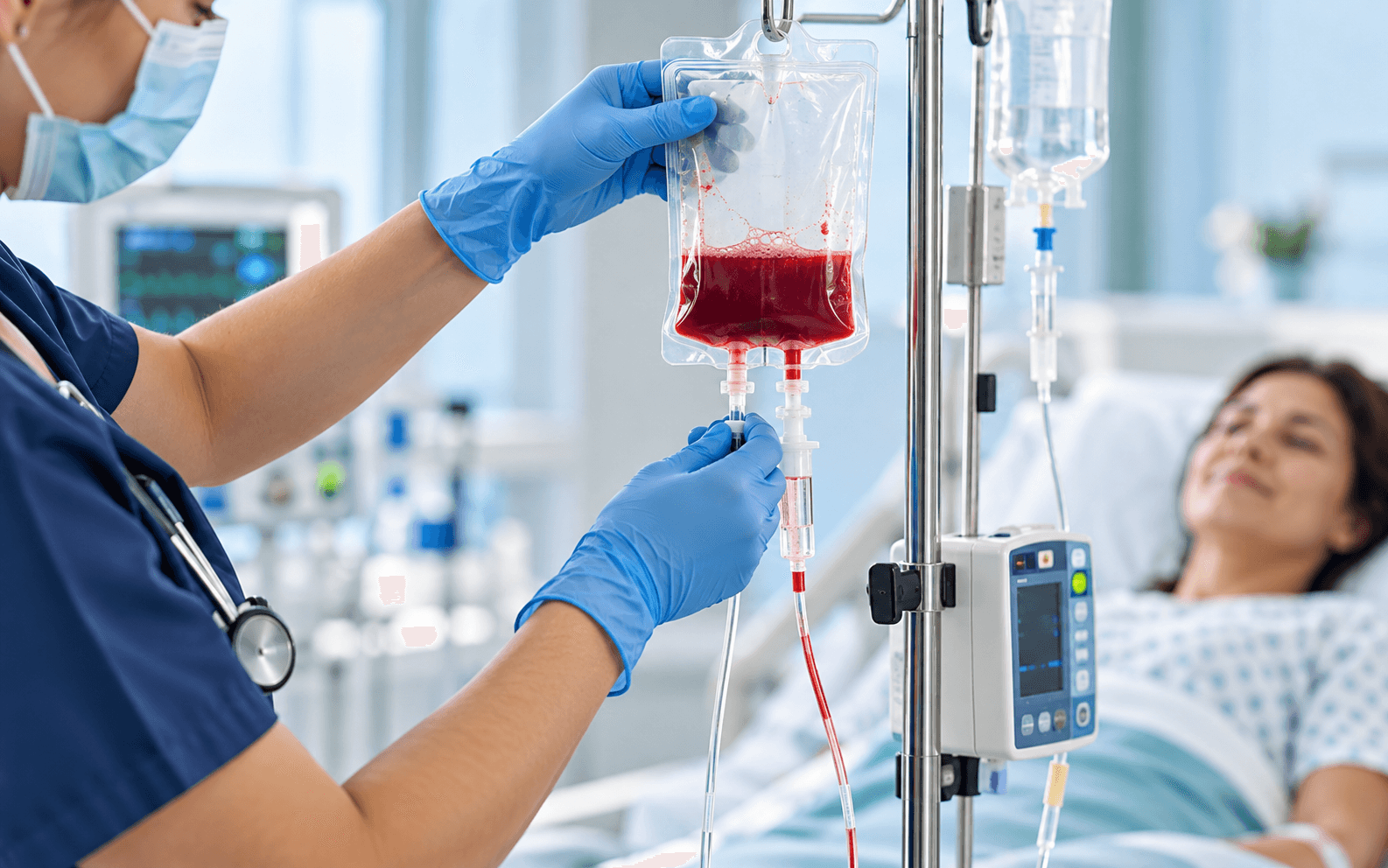
    The stem cells are given through a vein, similar to a blood transfusion.

  8. 08

    Engraftment period

    A stay in a protected unit while blood counts recover, with close monitoring and supportive care.

  9. 09

    Post-transplant care

    Medicines, transfusions, infection prevention and monitoring for complications such as graft-versus-host disease (GVHD).

  10. 10

    Extended follow-up

    Regular reviews and tests, often near the transplant centre for an initial period, then with your doctors at home

Care desk

How MedMax Care can help

Transplant is planned by your haematology and transplant team after reviewing your records and test results. MedMax helps you organise your information, so you can ask clear questions and compare options.

  1. 01

    Help you gather and share diagnosis, pathology, genetic test results, scans and treatment history for specialist review.

  2. 02

    Clarify proposed transplant plans and request an itemised written estimate from the hospital.

  3. 03

    Help you plan travel, extended stay, caregiver needs and coordination with your doctors at home.

Causes

Conditions that may lead to a transplant

  1. 01

    Blood cancers such as leukaemia, lymphoma and multiple myeloma

  2. 02

    Bone marrow failure conditions such as aplastic anaemia

  3. 03

    Inherited blood disorders such as thalassaemia and sickle cell disease

  4. 04

    Myelodysplastic syndromes and other marrow disorders

  5. 05

    Some inherited immune and metabolic conditions

Treated

Concerns a haematologist can assess

  • A diagnosis of leukaemia, lymphoma or myeloma where transplant is being discussed
  • Blood cancer that has returned or not responded to treatment
  • Severe aplastic anaemia or other marrow failure
  • Thalassaemia or sickle cell disease where transplant may be an option
  • Frequent transfusions, infections or unexplained low blood counts
  • A transplant recommendation where you would like a second opinion

Why this pathway

Why a specialist review matters

  • 01

    Transplant is a major treatment, so the diagnosis, disease status and timing need to be reviewed carefully before any decision.

  • 02

    A transplant team can explain whether transplant is the right option, which type may suit you, and what the alternatives are.

  • 03

    A written plan helps you compare donor options, expected hospital stay, time near the centre, caregiver needs, costs and follow-up.

Timing

When to see a haematologist

  1. 01

    Book an appointment if transplant has been suggested, if your blood disease has relapsed, or if you would like a second opinion on a plan.

  2. 02

    Seek urgent care for fever, bleeding, severe weakness, breathlessness or new infection symptoms, especially during or after treatment. Contact your treating team straight away.

  3. 03

    Call emergency services immediately for difficulty breathing, chest pain, heavy bleeding, seizures, confusion or collapse. Do not wait for an online enquiry.

After the theatre

Recovery and aftercare

  • Follow your transplant team’s instructions on medicines, appointments, blood tests and warning signs.
  • Take anti-infection and anti-rejection medicines exactly as directed and do not stop them without advice.
  • Follow infection-prevention precautions, including hygiene, food safety, and avoiding crowds and sick contacts, as your team advises.
  • Report fever, rash, diarrhoea, jaundice, breathlessness or any new symptom promptly, as these can signal infection or GVHD.
  • Plan to stay near the transplant centre for as long as your team advises, usually with a caregiver.
  • Ask when it is safe to fly home, and about vaccination, long-term follow-up and emotional support.

Stay on

Need nights after discharge?

Guest house, service apartment, or a hotel near campus — arranged as Recovery, not a tourist add-on.

See Recovery

Making decisions about transplant care.

A transplant recommendation is a major decision, and a careful second review often helps you proceed with more confidence. Keep your current haematologist informed, share your complete records, ask for a written plan and confirm the hospital’s accreditation, transplant team and infection-control facilities before you decide to travel. If you have urgent symptoms, seek care near you first.

What to ask before transplant

  • Is transplant recommended for my diagnosis and disease status, and what are the alternatives?
  • Which type of transplant, and which donor options are available for me?
  • What are the risks specific to my case, including GVHD and infection?
  • How many transplants of this type does the unit perform each year, and can you share outcomes in writing?
  • How long must I stay near the centre, and what caregiver support is needed?
  • What is included in the written estimate, and what is not?
  • How will my care be coordinated with my doctors at home?

Specialist review before you travel

Send your reports and treatment history for review so you have a clearer picture of your options, and a list of questions to discuss with your own haematologist, before any decision about travel

Get a second opinion on your transplant plan

Share your reports and we’ll help you organise a specialist review. Transplant recommendations are made by the haematology and transplant team after clinical assessment

Questions

Before you pack

Broader India travel questions live on Medical, Wellness, and Ayurveda.

Do I need a bone marrow transplant?

It depends on your diagnosis, how the disease has responded to treatment, your age and overall health, and donor availability. A haematologist or transplant specialist decides after reviewing your records; this page cannot confirm suitability.

How much does a bone marrow transplant cost in India?

Costs vary by transplant type, donor source, hospital, length of stay, medicines and complications. Ask for an itemised written estimate after assessment, and ask what is not included; this page does not promise a fixed price.

How do I find a donor?

Your team starts with HLA testing of you and your family. If no suitable family donor is found, options may include a half-matched family donor, an unrelated donor from a registry or cord blood. Ask the hospital in writing how donor searches are handled for international patients.

What is the difference between autologous and allogeneic transplant?

Autologous uses your own stem cells and avoids graft-versus-host disease. Allogeneic uses donor cells and may offer a stronger immune effect against some diseases but carries additional risks. Your team will explain which applies to you.

Is it safe for me to travel for a transplant?

It depends on your condition, current treatment and blood counts. Some patients are well enough for planned travel, while others should be treated near home. Your haematologist must confirm fitness to travel before you book.

How long would I need to stay?

It varies by transplant type and recovery. Plan for a hospital stay for the transplant itself, followed by an extended period near the transplant centre for monitoring. Your team will give a case-specific estimate; allow for flexibility, as complications can lengthen the stay.

Do I need a caregiver?

Usually yes. Transplant centres commonly require a trained caregiver to stay with you, particularly after discharge. Ask the hospital about caregiver requirements, accommodation and support.

What are the main risks?

Risks include infection, bleeding, organ side effects, graft failure, relapse and, after donor transplants, graft-versus-host disease. Your team will explain the risks specific to your case and treatment plan.

Can I send my records for an opinion before travelling?

Yes. You can share your diagnosis, pathology, genetic results and treatment history for review, and the transplant team will advise on any further tests needed.

What follow-up care will I need back in the US?

You will usually need long-term follow-up with a local haematologist or transplant centre, regular blood tests and medicines monitoring. Ask the hospital for a detailed transplant summary, donor and graft details, medicine list and test reports to share with your home clinicians.

Does insurance cover treatment abroad?

Coverage varies by plan. Check with your insurer before travelling; MedMax cannot guarantee reimbursement.

Comparator

See exactly how much you'll save

Typical published self-pay bands — not a personal quote. Start a case when you want numbers written for your file.

87%

About $41,800 on a typical knee replacement vs United States.

At home
$48,000
3–9 months
In India
$6,200
1–3 weeks
Start your case for a written quote

Ready?

Bone marrow transplant at a glance

No hospital sees the file until you approve a match. A care manager acknowledges the same day.

  • Specialist review of your diagnosis and records
  • Guidance on donor matching and transplant type
  • Written, itemised treatment estimate
  • Extended-stay, caregiver and follow-up planning

Prefer to talk first? +91 94935 34343

Your details

Request a care plan

One business day to reply — usually a checklist or specialist match.

First name
Last name
Email
WhatsApp / phone
Treatment interest
How soon are you looking to travel?
Brief medical note

We never share reports with a hospital until you say so. No obligation to travel.